
Big Stone County Court Record Requests
Minnesota court administration holds Big Stone County District Court records. There is no separate county clerk system. For a public case, hearing, judgment, or document, try Minnesota Court Records Online first. MCRO is good for locating a case number and reviewing eligible public material. It is not the official court file. It cannot give you a certified copy either. For the official record, a locally stored record, or certification questions, contact the Big Stone County District Court Administrator. You can also ask local court administration.
- Identify the Big Stone County court, case number if known, parties or case title, and the specific record sought.
- Use MCRO, a Big Stone County courthouse terminal, or the court-administration counter to locate available public case information.
- Choose a request channel: in person, mail, phone for routing, or Minnesota eFile and eServe when that route is permitted for an authorized filer.
- State whether the request is for a plain, certified, or exemplified copy and give the delivery method.
- Follow Big Stone County court fee and payment directions, then confirm any certified or time-sensitive request with local court administration.
Big Stone County court administration can route whatever you bring it: a calendar question, a copy request, or a missing-record inquiry. Skip the county's general administrative data-request process for judicial files. That channel handles county data, not case records. One call can confirm where a request should go. The request itself still needs the case and document details before anything can be completed.
Big Stone Court Records Custody
The Big Stone County District Court names Rachel Schmidt as Court Administrator. Her office is the contact for official copies, certified copies, locally stored records, and any docket or calendar confusion. Big Stone sits in the Eighth Judicial District. That district structure does not replace the local office for a single county case. The court itself holds original jurisdiction over civil, family, probate, juvenile, criminal, and traffic cases filed in Big Stone County.
Big Stone County District Court Administration
20 S.E. Second Street
Ortonville, MN 56278
(320) 849-7005
Fax: (320) 839-2537
Monday through Friday, 8:00 a.m. to 4:30 p.m.
Regular hours allow inspection of publicly accessible original records at the normal place of record. Call ahead about closures or holiday hours, since the public lot sits behind the building.
Kinds of Court Records
A court record is more than a printed calendar. The Big Stone County Register of Actions is the running case history. A calendar only lists matters set to be heard. A document image is one filing or order. Judgment information covers docketed money judgments and satisfactions. A certified copy is a record authenticated through the court's copy process. Each category answers a different question, and each may carry different remote-access limits.
- Case Details: basic public case information and the route into the available record.
- Register of Actions: the case title, origin, activities, proceedings, and filing history.
- Calendar entry: a scheduled hearing, time, location, judicial officer, and event type.
- Document image: a public filing or order available online or through a court access channel.
- Judgment record: docketed money-judgment and satisfaction information.
- Certified or exemplified copy: a court-provided copy with the requested authentication level.
Case type alone proves nothing. A listing is not an outcome. A hearing label is not a final order. Where public access allows, read the Register of Actions along with the relevant signed document.
Big Stone Copy Request Routes
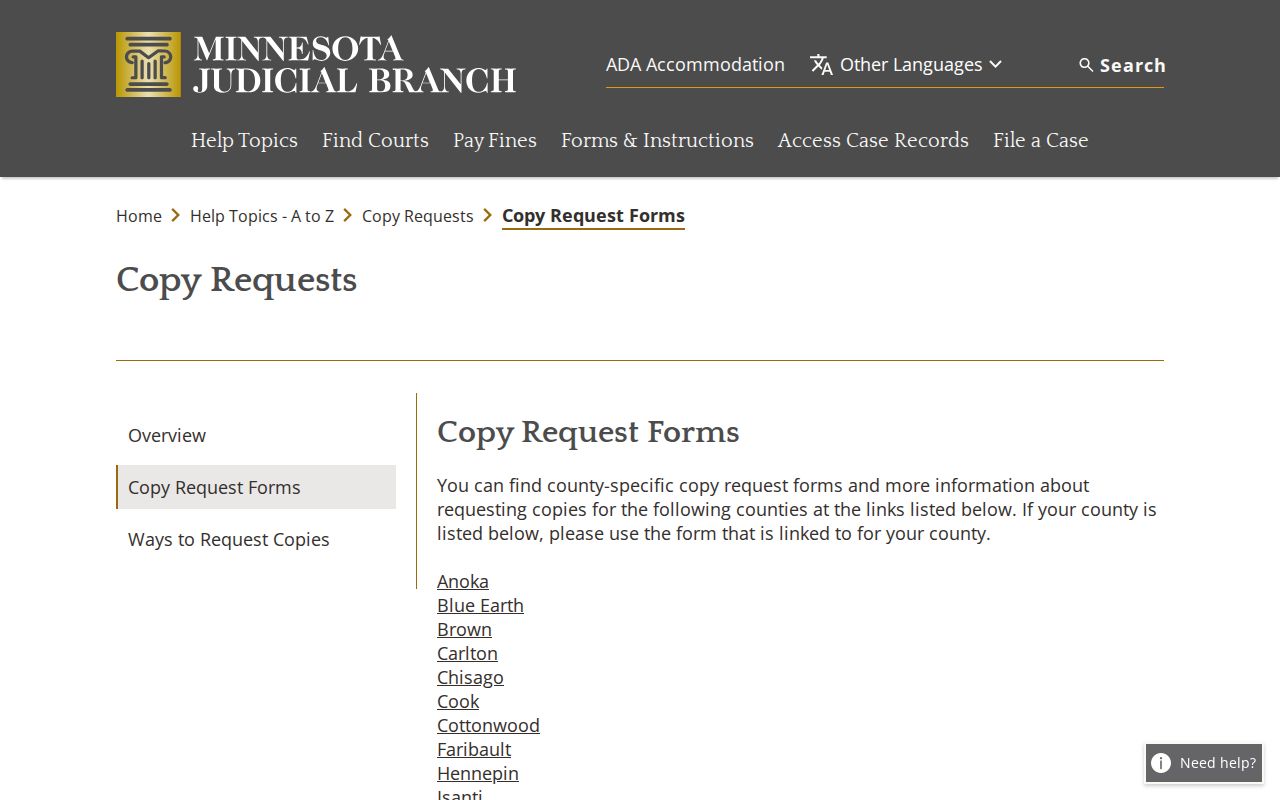
Big Stone County has no copy-request form of its own. The statewide copy-request forms page leaves requesters with two options: the statewide form or a simple letter. Neither route is mandatory. A letter works fine. The form simply helps the court route your request on the first try. It is worth using when you have it.
Whatever you send, give the clerk enough to find the file. That means the county, the case number if you know it, and the party or case title. Include the document you want, the copy type, and how you want it delivered. Add your contact information so court staff can reach you with questions.
The official copy-request forms page lays out the statewide route. It applies whenever a county-specific form does not exist.
A clear request beats a broad one. Asking Big Stone County court administration for a whole file is harder to route than naming a specific filing or order. When the case number alone does not explain what you need, add the date and title.
Court Records: What They Contain
What you can see depends on the Big Stone County case, the record type, and the access rules. MCRO Case Details can point to public case information, the Register of Actions, hearing information, and eligible document links. Local court administration stays the source for the official record. Treat a search result, a calendar line, and an individual document as distinct parts of the court file.
| Case title and origin | Identifies the case and how it began in the court system. |
|---|---|
| Register of Actions | Lists activities, proceedings, filings, and related case events. |
| Hearing record | Shows scheduled setting information; the current calendar can change. |
| Public documents | Individual filings or orders available under the applicable case, date, and Rule 8 limits. |
| Judgment information | For docketed money judgments and satisfactions when that search applies. |
| Certification | Confirms that the court has authenticated the copy requested. |
Exhibits mark an important limit. Public evidence may be inspectable in person, but Rule 8 keeps exhibits off remote access, and medical records have judge-authorized access methods. Remember: a calendar is only a hearing schedule, not the full Register of Actions and not the official record.
Big Stone Records Beyond MCRO
Online access is convenient, but public does not always mean remotely available. Minnesota works in three practical layers. MCRO covers many remote public records. Public courthouse terminals and the State Law Library open broader public-access categories. Local court administration handles official copies and access decisions. That layering explains why a Big Stone County court record might be open for inspection at the courthouse yet missing from a remote document search. Rule 8 of the Minnesota Rules of Public Access sets the whole inspection, copying, remote-access, terminal-access, evidence, and fee framework.
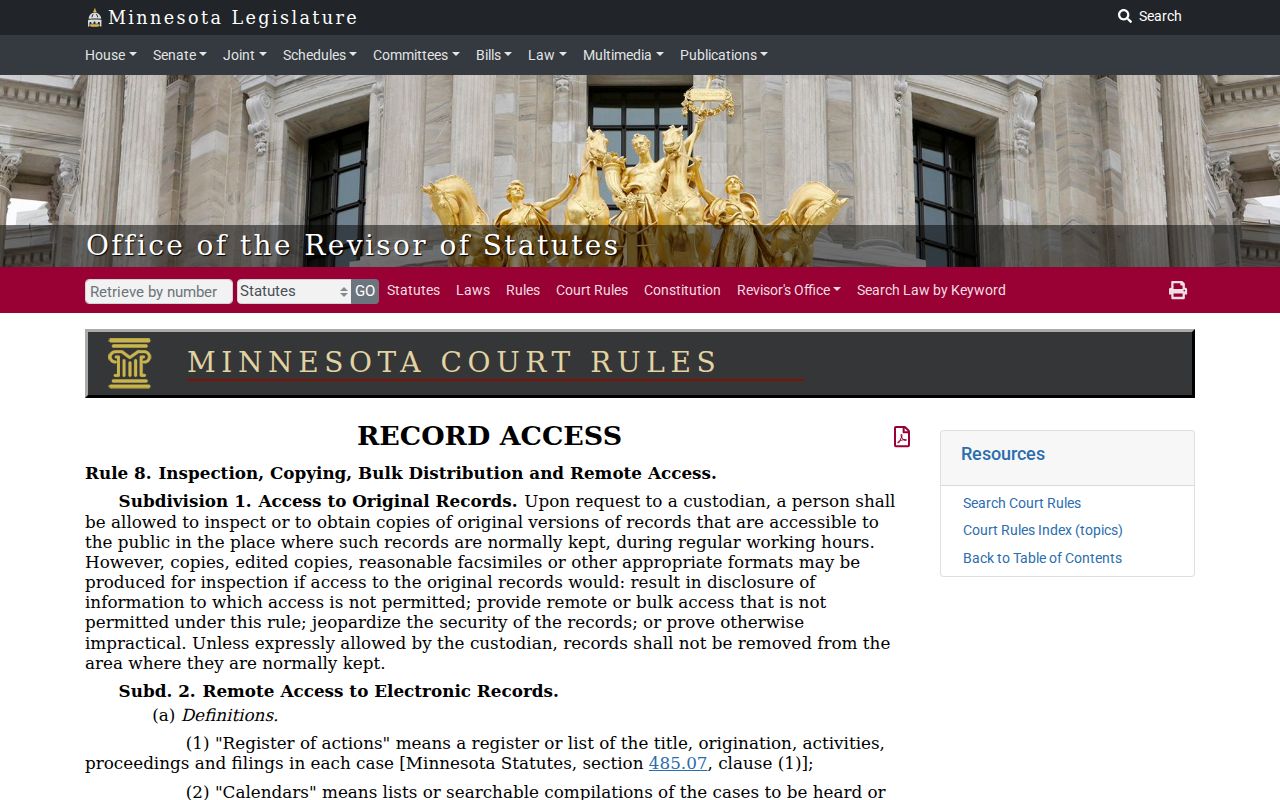
Rule 8 permits an alternate access format when direct access could expose nonpublic information, enable improper remote or bulk access, create a security risk, or prove impractical. That is a reason to ask court administration about the right channel. It is not a promise of access to a restricted record.
Copy Fees and Certification
Copy costs in Big Stone County follow statewide rules. Plain, uncertified copies are generally free. Certified copies generally run $14 per document. At the exemplified tier, the Judicial Branch lists uncertified copies at $14 and certified copies at $28. For a live request, check the Big Stone district-court fee page, since its local rows name the exact service and any updated amount. That page controls over the general figures whenever the two differ.
| Copy or service | Published amount |
|---|---|
| Plain or uncertified copy category | Generally $0 in the statewide description |
| Certified copy or certified instrument | $14 per document/category listed |
| Exemplified, uncertified | $14 |
| Exemplified, certified | $28 |
| Reports, 1 to 50 pages | $5 on the Big Stone fee page |
| Scanning or fax service | $25 per 50 pages or part on the Big Stone fee page |
That same fee page covers filing fees and a law-library addition charged on many filings. Those costs belong to filing. They do not attach to a public online case search of the Big Stone court docket. Mixing them up with copy fees is easy to do and worth avoiding. Service categories and amounts change, so verify the fee page before sending payment.
Big Stone Copy Types Compared
Which copy type fits your need? A plain copy works fine for reading a public order. It also suits checking the text of a filing in a Big Stone court record. A certified copy carries court certification, which is what a recipient wants when authentication matters. An exemplified copy goes one step further. It carries the added level of certification the court describes. One caveat: documents pulled from MCRO online have no certification status at all. They are public and downloadable, but not certified.
| Type | Source | Use |
|---|---|---|
| MCRO result or document | Remote public access layer | Locating and reading eligible public material. |
| Plain copy | Local court administration | Uncertified court copy. |
| Certified copy | Local court administration | Court-authenticated copy. |
| Exemplified copy | Local court administration | Certification level requested for the receiving purpose. |
Most routine copies are same-day unless stored off-site. Before counting on that timing, confirm it with the local office, along with payment and delivery details for your copy of the court record.
Access Rules for Court Records
Who sets the access rules for Big Stone County court records? The Minnesota Rules of Public Access to Records of the Judicial Branch govern them. The county's general administrative data practice procedure does not. Minn. Stat. § 13.90 keeps judiciary data outside the Chapter 13 framework. It hands judicial access to Supreme Court rules. So a docket search in Big Stone runs on court rules, county policy aside. A sealed, confidential, or expunged matter follows its own separate process.
Key access rules:
Rule 8 supports inspection and copies of publicly accessible original records at the normal place of record, while defining remote and terminal limits.
Minn. Stat. § 13.90 explains why a judicial case file should not be automatically routed as a general county Chapter 13 request.
Minn. Stat. Chapter 609A addresses expungement and sealing; the order and current court instructions control access.
Need access to restricted material? The Judicial Branch supplies CON100 instructions. It also supplies CON101, the Request for Access to Confidential or Sealed Record. The form asks the requester to state involvement and list the specific records. The requester must give a detailed reason. A date, signature, and contact information complete it. One form can cover more than one case in the same county.
Big Stone Records and Federal Cases
A Big Stone County District Court file is not a federal case file. The two systems never merge. A federal matter belongs to the U.S. District Court for the District of Minnesota, and the official Fergus Falls Courthouse page identifies one district location for it. Bankruptcy records are federal too, not part of the Big Stone district-court record. State appeals travel a separate Minnesota appellate path as well. Each system assigns its own file numbers and follows its own access procedures, so a Big Stone docket search will not surface them.
Think of the Fergus Falls federal courthouse as a jurisdictional signpost. It marks where a matter belongs when it is not part of the Big Stone court record system. That page shows the federal courthouse's role in the District of Minnesota's structure.
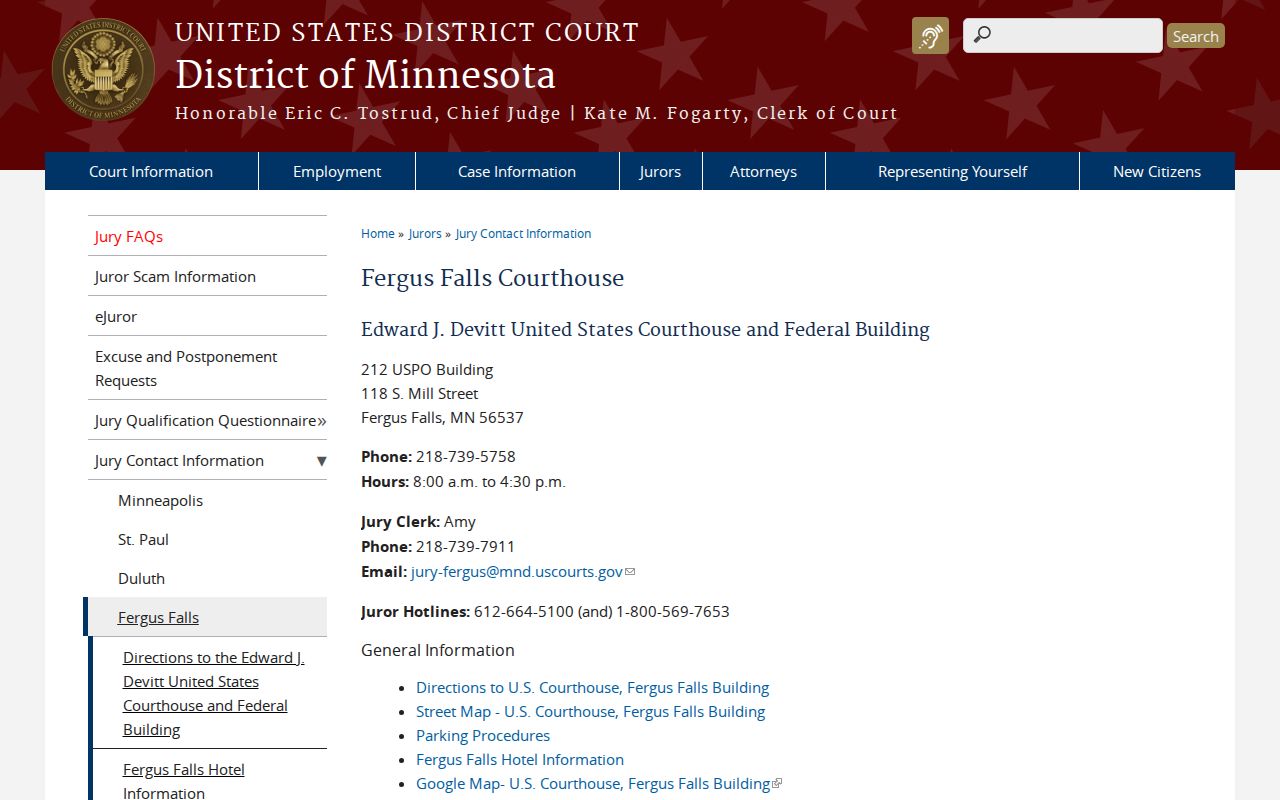
That courthouse stands for a separate court system entirely. Its presence does not mean a Big Stone case can be retrieved from federal court, or that a federal case appears in MCRO results.
Big Stone Records and PACER
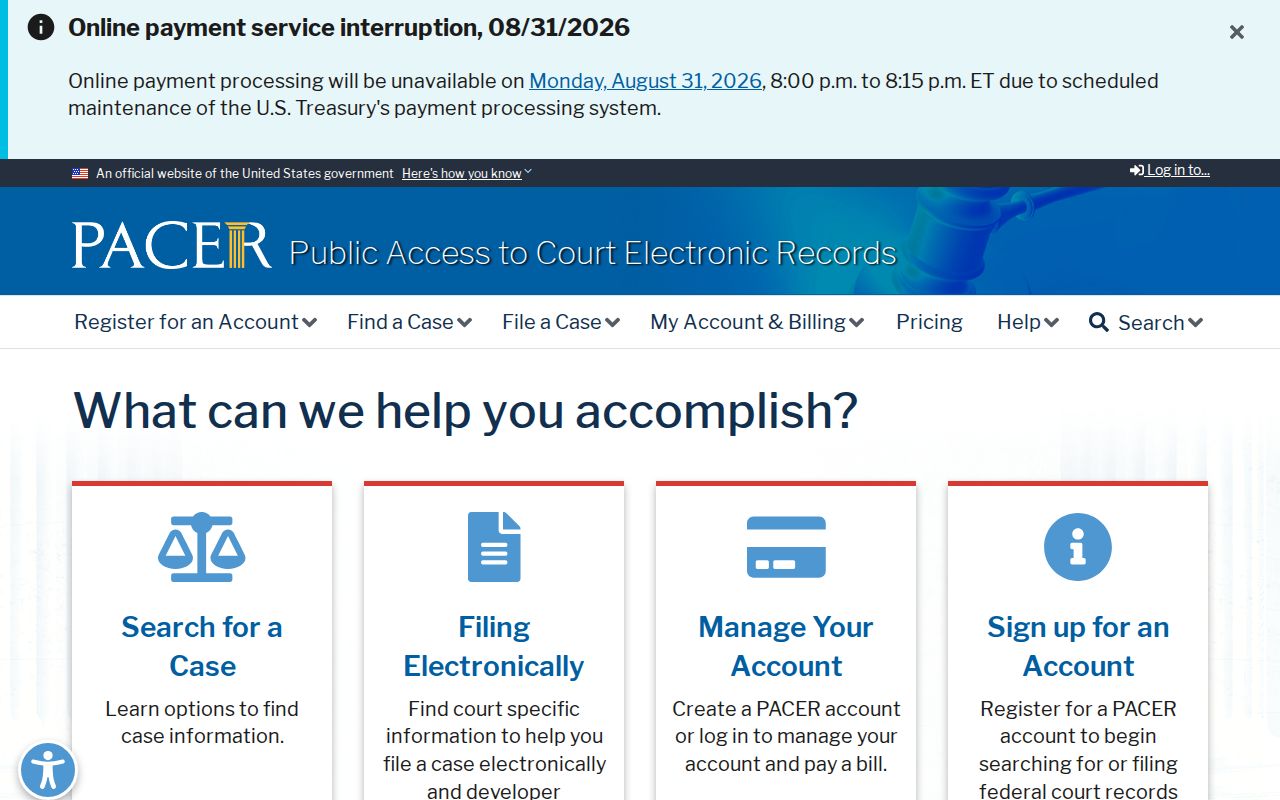
PACER handles federal case information. It is not a search tab inside MCRO, and it cannot replace a request to Big Stone court administration for a county file. For a state trial-court matter, MCRO and the local district court are the right stops. Turn to PACER only when the case is truly federal. Keeping the two routes straight saves you from searching the wrong system and concluding a record does not exist when it does.
PACER's official public information page shows the federal case-search path and explains the account side.
Start with a Big Stone case number. The Big Stone docket search is the place to begin. If the public record or certification you need is not available remotely, request an official copy from court administration.